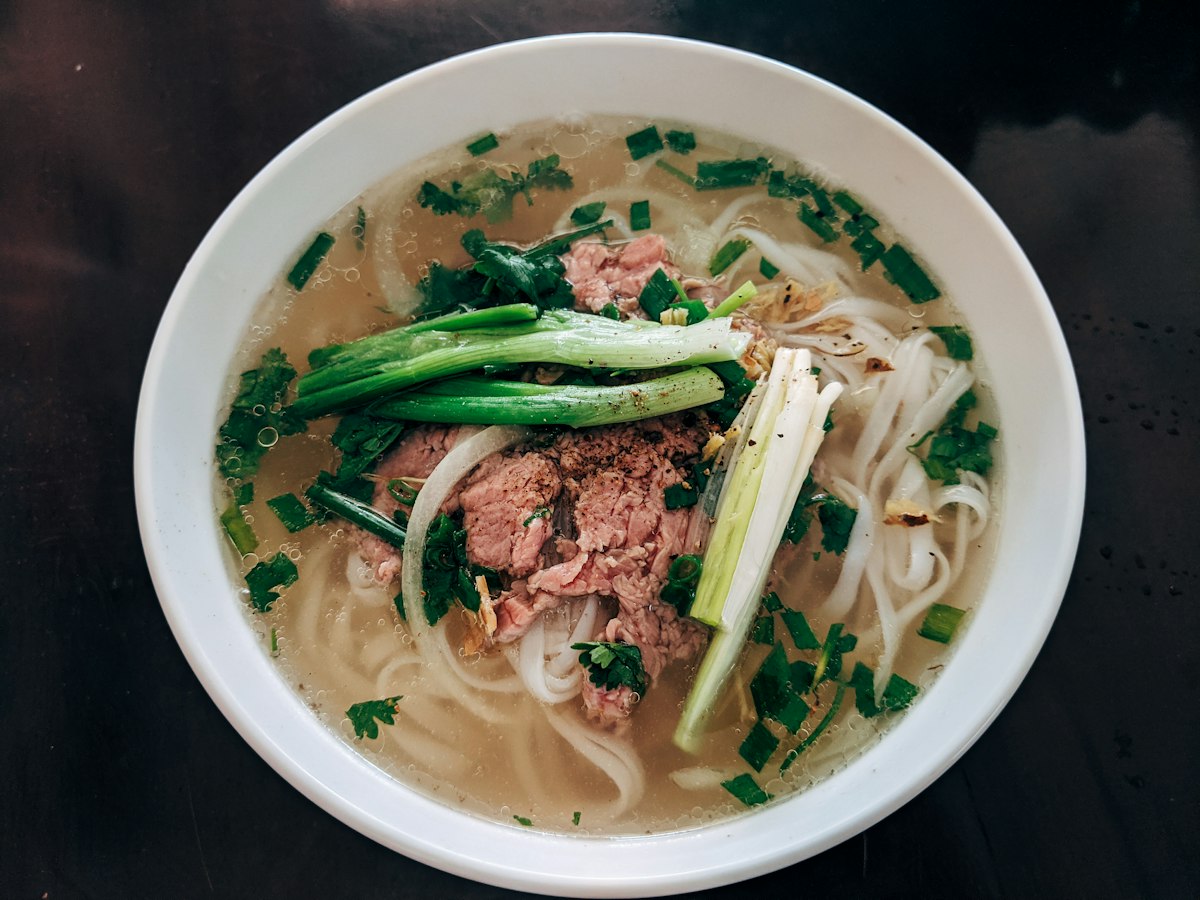
Pho is Vietnam's national dish, and for good reason. It is a bowl of rice noodles in a slow-simmered broth, topped with herbs, meat, and condiments. It sounds simple. It is not. A great bowl of pho represents hours of careful extraction, pulling flavour, body, and clarity from bones, spices, and charred aromatics. The Vietnamese eat it for breakfast, lunch, and dinner. Once you understand why, you will too.
The History of Pho
Pho's origins trace back to northern Vietnam in the early 20th century, most likely in Hanoi or the surrounding Nam Dinh province. Its exact origins are debated, but the most widely accepted theory places it at the intersection of Vietnamese and French colonial food cultures. The name itself may derive from the French pot-au-feu, a beef and vegetable stew that the French brought to Indochina. The Vietnamese adapted the concept, replacing the heavy stew with a light, aromatic broth and adding rice noodles, a staple of the region.
Before French colonisation, the Vietnamese rarely ate beef. The French demand for beef created a supply of bones and off-cuts that would have otherwise gone to waste, and resourceful Vietnamese cooks turned them into broth. By the 1920s, pho was a common street food in Hanoi, sold by itinerant vendors who carried their entire operation in baskets balanced on a shoulder pole. After the partition of Vietnam in 1954, millions of northerners migrated south, bringing pho with them. In the south, particularly in Saigon, the dish evolved. The broth became sweeter, the herb plate grew larger, and condiments like hoisin sauce and sriracha became standard additions. After the fall of Saigon in 1975, the Vietnamese diaspora carried pho to the rest of the world. Today it is eaten in every major city on earth.
The Broth: Where Everything Begins
The broth is the soul of pho. It takes six to twelve hours to make properly, and there are no shortcuts. For beef pho (pho bo), the base is made from beef leg bones, knuckles, and oxtail, simmered at a gentle roll to extract collagen and marrow without clouding the liquid. The bones are often parboiled first and rinsed to remove impurities, and this is what gives pho broth its clarity. A murky broth is a failed broth.
The aromatics are what make pho unmistakable. Onion and ginger are charred directly over a flame until blackened, which caramelises their sugars and adds a smoky depth. These go into the pot along with a spice sachet containing star anise, cinnamon stick (Vietnamese cassia bark, specifically), cloves, coriander seeds, and sometimes cardamom or fennel seeds. The spices should be present but not dominant. You should not taste any single one. Fish sauce is added for salinity and umami, and a small amount of rock sugar balances the savoury elements. The finished broth should be clear, deeply flavoured, aromatic, and light enough to drink like tea.
"Pho is a mirror of Vietnamese history and culture. Each bowl reflects the geography, the climate, the colonial influences, and the personal touch of whoever made it."
Andrea Nguyen, The Pho Cookbook
Northern Pho vs Southern Pho
This is the great divide in the pho world, and it runs deeper than just geography. Northern pho, the Hanoi style, is austere. The broth is clean and slightly more savoury, the garnishes are minimal: just a few slices of spring onion and perhaps some coriander. You get a plate of quay (fried dough sticks) on the side for dipping. Northern purists consider hoisin sauce and sriracha to be abominations. The noodles tend to be wider and the overall presentation is restrained. It is about the broth and nothing else.
Southern pho, the Saigon style, is exuberant. The broth is slightly sweeter, with more sugar and a more generous hand with the spices. But the real difference is the herb plate: a towering basket of Thai basil, saw-leaf coriander, bean sprouts, lime wedges, sliced chillies, and sometimes even culantro. Diners tear the herbs and drop them into the bowl, squeeze in lime, and add hoisin sauce and sriracha to taste. Southern pho is interactive. You build the final flavour yourself. Neither style is better. They are different philosophies.
Beef Pho vs Chicken Pho
Pho bo (beef) is the original and the most common. The meat comes in several forms, and most pho shops let you choose a combination. Tai is rare sliced beef, added raw to the bowl so the hot broth cooks it to medium. Chin is well-done brisket, slow-cooked until tender. Nam is flank. Gau is fatty brisket. Gan is tendon, cooked until gelatinous and silky. Bo vien are beef meatballs, bouncy and dense. A bowl of pho dac biet (special pho) usually includes a mix of all of the above.
Pho ga (chicken) is a lighter alternative that many Vietnamese actually prefer for breakfast. The broth is made from a whole chicken simmered with the same charred aromatics and spices, but it has a more delicate, sweeter flavour than the beef version. The chicken is shredded or sliced and served on top of the noodles. Chicken pho is less rich and more refreshing, and on a hot day it can be exactly what you want.
The Noodles
Pho noodles (banh pho) are flat rice noodles made from rice flour and water. They should be silky, slightly chewy, and slippery. Fresh pho noodles are the standard in Vietnam, and they are soft, delicate, and have a different texture from the dried noodles commonly used overseas. In Hanoi, the noodles tend to be wider and flatter. In Saigon, they are often thinner. The quality of the noodle matters more than most people realise. A great broth with bad noodles is a disappointing bowl.
How to Eat Pho
Start by tasting the broth on its own, with a spoon. This tells you what the cook has built. Then add your herbs. Tear the Thai basil leaves and drop them in, along with bean sprouts if you want them. Squeeze in lime to taste. If you like heat, add sliced chillies or sriracha. Some people add hoisin sauce; traditionalists will judge you for this, but it is your bowl.
Use chopsticks in your dominant hand for the noodles and meat, and a spoon in the other for the broth. Dip the meat into the various sauces on the table if you like. The key is to eat while everything is hot, because the noodles will continue to absorb broth and soften as the bowl sits. Pho is meant to be eaten with purpose.
Pho vs Ramen
They are both noodle soups. That is where the similarity ends. Ramen uses wheat noodles; pho uses rice noodles. Ramen broth is often opaque and heavy (especially tonkotsu); pho broth is clear and light. Ramen is seasoned with soy sauce, miso, or salt; pho relies on charred aromatics and warm spices. Ramen toppings are cooked and arranged; pho toppings include raw herbs that you add yourself. The eating experience is fundamentally different. Read our complete ramen guide for the full breakdown.
Where to Find the Best Pho
Hanoi is the birthplace and still the spiritual home of pho. Pho Thin on Lo Duc Street has been serving the same bowl since 1979. The broth is beefy and clean, the beef is stir-fried briefly before being added (a distinctive Hanoi touch), and the queue starts before dawn. Pho Gia Truyen on Bat Dan Street is another Hanoi legend, known for its perfectly clear broth.
In Saigon, pho shops tend to be bigger and louder. Pho Hoa Pasteur on Pasteur Street is an institution. Pho Le on Nam Ky Khoi Nghia is famous for its fatty brisket. And every neighbourhood has a pho stall that the locals swear by. The best pho is often the one closest to where you are staying, served before 9am, when the broth is freshest and the noodles have just been made.
We are planning to map Hanoi and Ho Chi Minh City as future Noodle Crawl cities. Until then, explore our Bangkok noodle guide or browse our other noodle guides for more bowl knowledge.